
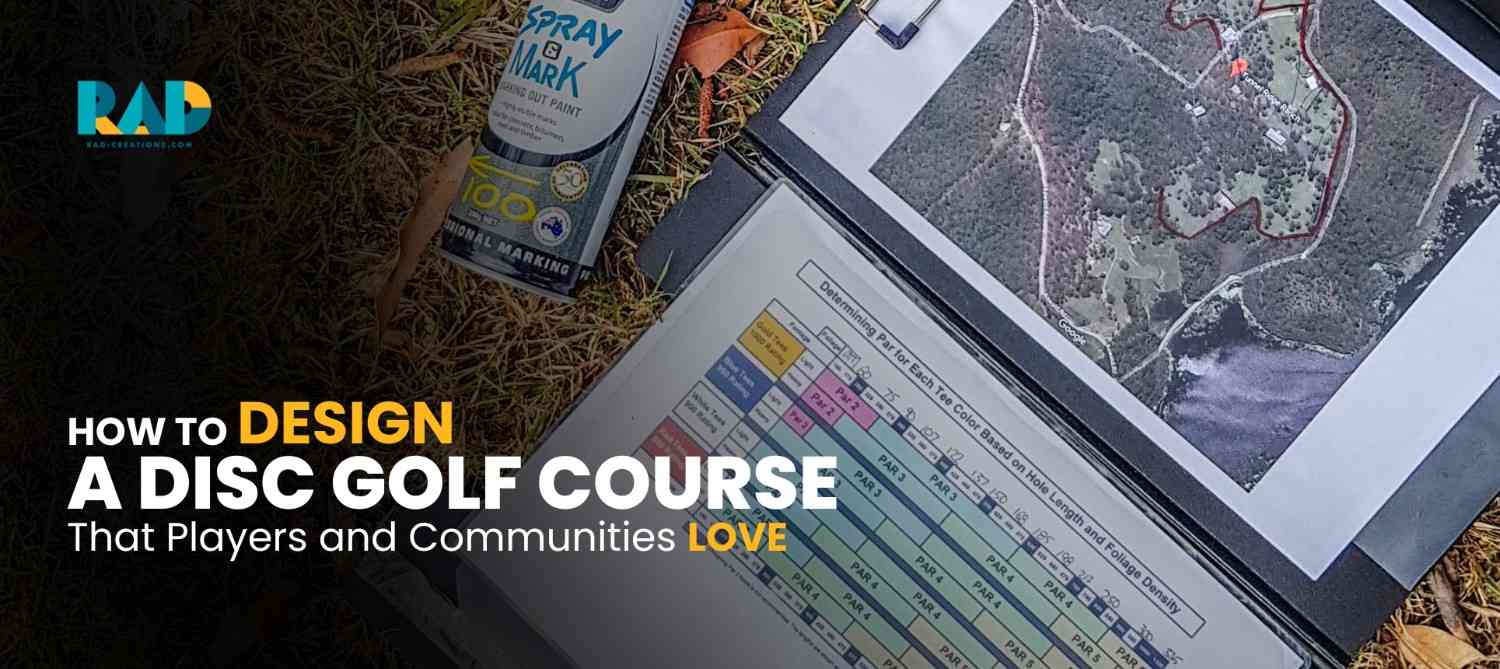
Design a Disc Golf Course isn’t just about marking baskets on a map—it’s about creating a space where play meets purpose. Whether it’s tucked into a school oval, spread across a scenic park, or embedded in the bushland, the best disc golf courses are the ones that players love to return to and communities are proud to call their own.
At RAD (Recreational Activity Design), we’ve helped.How to Design a Disc Golf and install over 100 courses across Australia. From casual 6-hole school setups to championship-level layouts, our experience reflects the rapid growth of disc golf in Australia and the increasing demand for thoughtful, community-ready design.
Balancing Challenge and Accessibility in Course Layouts
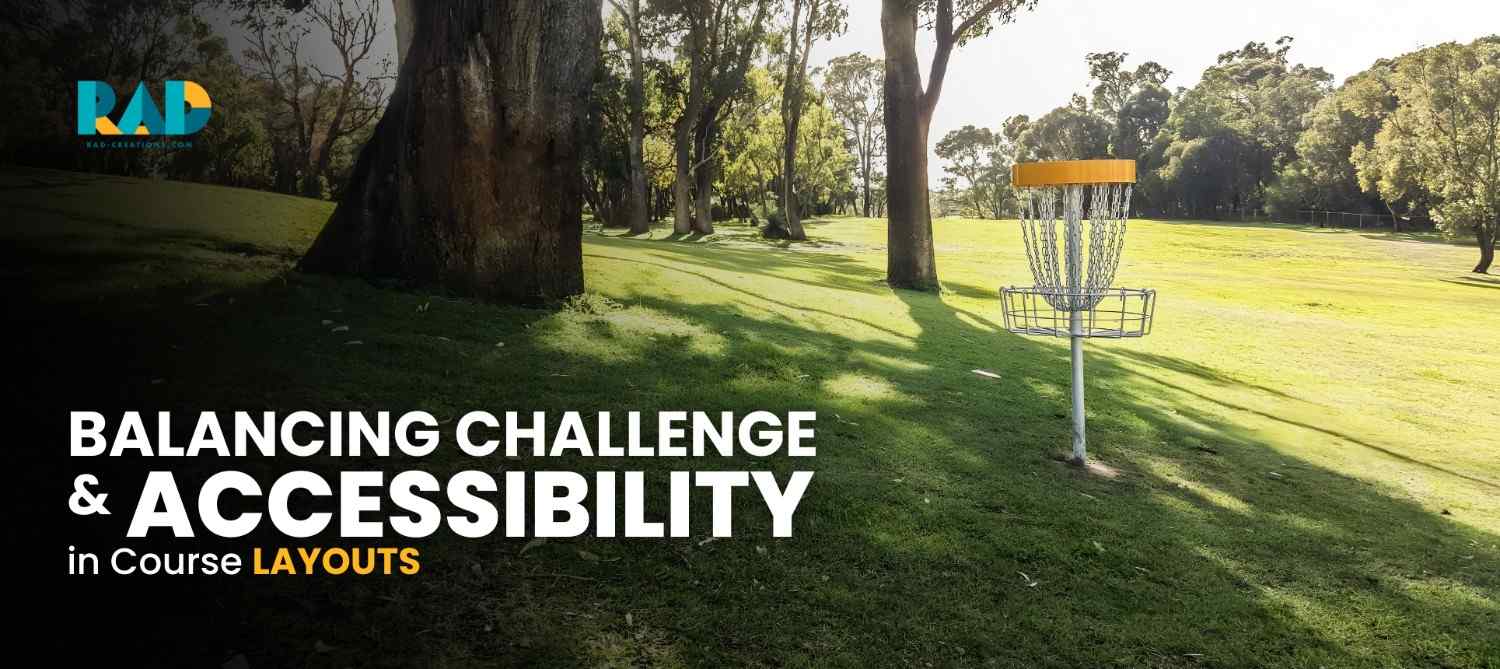
A great disc golf course does two things at once:
- Keeps seasoned players engaged
- Welcomes newcomers with open fairways
Designing for All Skill Levels
A good layout includes a mix of hole types—short technical shots, open drives, and doglegs—that reward skill without punishing beginners. At RAD, we focus on tiered tee pads (e.g., short and long) so players can choose their challenge.
Avoid the Trap of “Too Easy” or “Too Hard”
If a course is overly difficult, beginners get frustrated. If it’s too easy, competitive players won’t come back. The sweet spot? Courses that encourage learning, improvement, and creativity.
Pro Tip:
To explore examples of layouts we’ve created across the country, view our portfolio of RAD disc golf projects.
How to Design a Disc Golf has gained a reputation as a family-friendly sport, so thoughtful design ensures players of all abilities enjoy their time on course.
The Role of Flow, Safety, and Navigation in Great Design a Disc Golf Course
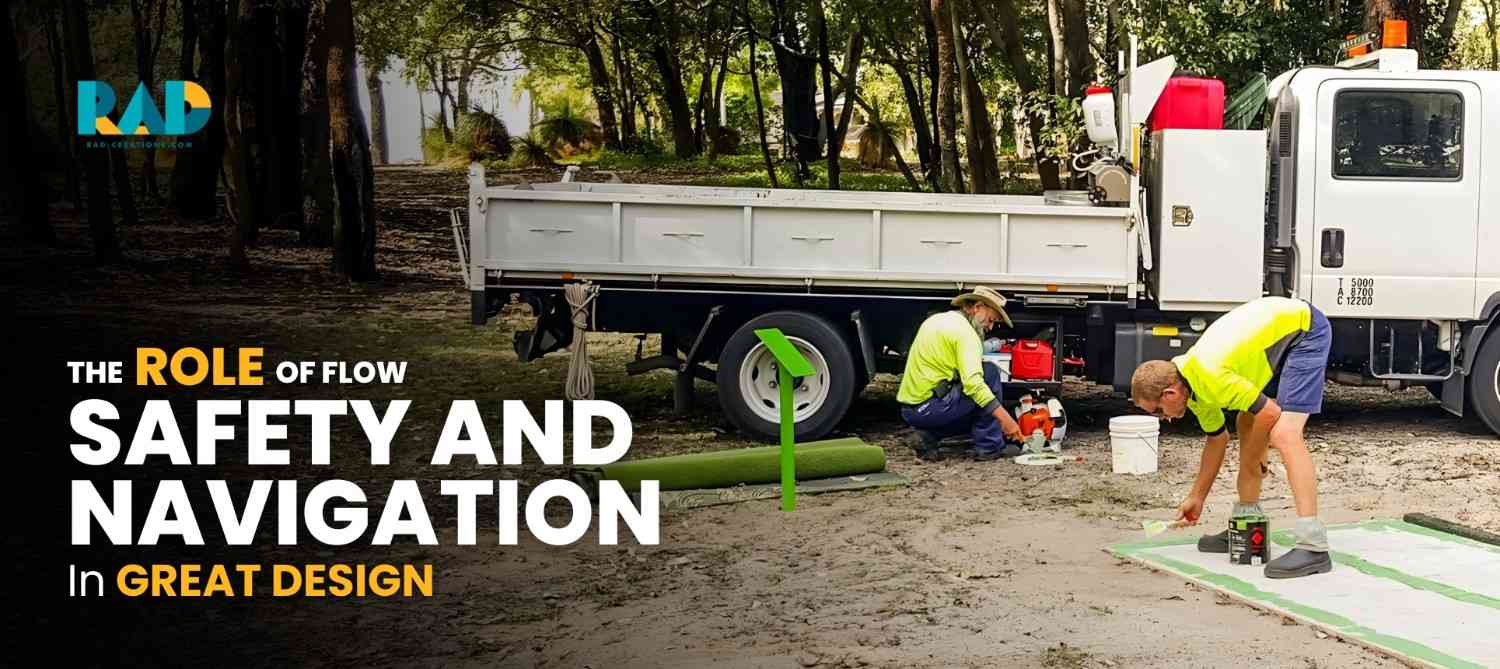
You can have stunning terrain and perfect baskets—but if players are getting lost or crossing paths unsafely, your course will fall flat.
Flow = Seamless Transitions Between Holes
A well-designed course allows players to move naturally from basket to tee. Avoid long walks or confusing turns that break rhythm and kill momentum.
Safety Comes First
Courses must be designed with non-players in mind. Think clear buffer zones between fairways and paths, visibility from tees, and safe throw zones. RAD prioritises line-of-sight awareness and spacing in every project.
Navigation Should Be Intuitive
Signage, maps, and markers are essential, especially on public or beginner-heavy courses. We recommend:
- Simple tee signs with hole numbers, distances, and par
- Course maps at the start and online
- Directional arrows between holes
Pro Insight:
Think like a first-timer. If someone with zero How to Design a Disc Golf knowledge walks the course, can they find their way without asking?
Designing a Disc Golf Course for Environment, Space, and Budget
Every Design a Disc Golf Course space has a story and every. How to Design a Disc Golf course should work with the land, not against it.
Respect the Landscape
At RAD, sustainability is non-negotiable. We work around native trees, avoid erosion-prone areas, and never introduce permanent structures that disturb ecosystems. Disc golf is naturally low-impact—it should stay that way.
Adapt to the Space You Have
Small schoolyard? Urban parkland? Bush reserve? We’ve built courses in them all. Smart design doesn’t need a big footprint—it needs creativity.
- A 9-hole course can fit in under 2 hectares
- Courses can double as walking trails or environmental education paths
- Multi-use land = multi-benefit for councils and communities
Schools increasingly use disc golf to activate space and promote healthy play—and many discover it’s also ideal for kids seeking new outdoor interests. Learn more about why disc golf is great for younger players in disc golf for kids – the solution to boredom.
Curious where others are already playing? Use our guide to find a disc golf course near me.
Work Within Budget (and Still Make It Great)
You don’t need a six-figure investment to build a memorable disc golf experience. We offer:
- Tiered design packages
- Cost-effective baskets
- Scalable layouts that grow over time
Pro Tip:
Start with a 6-hole or 9-hole “pilot course.” Let the community engage with it, then scale based on feedback and demand.
If you’re considering building a course for your community, school, park, or venue, you might appreciate exploring the top 5 reasons to use an experienced disc golf course designer.
Frequently Asked Questions
How much space do I need to build a disc golf course?
A 9-hole beginner course can be installed on as little as 1.5–2 hectares. Full championship layouts may require 8–12 hectares, but every site is unique. RAD tailors design to your land’s shape, elevation, and use.
Can we install a course in shared-use parks or nature reserves?
Absolutely. With proper planning, disc golf can safely coexist with walkers, runners, and dog parks. RAD ensures minimal environmental impact and designs layouts that protect high-use areas and sensitive habitats.
What does it cost to install a course?
Cost depends on size, basket type, signage, and ground prep. Entry-level courses can start from a few thousand dollars, while full competition-level installs are higher. RAD offers scalable options and full project management support.
Why Communities Are Turning to Design a Disc Golf Course
“We had an unused section of parkland collecting weeds. Now it’s a buzzing disc golf hub with local families, teens, and even retirees playing daily.” Local Council Parks Manager, WA
Disc golf courses provide more than play they activate land, encourage healthy outdoor activity, and build inclusive communities. They’re affordable, low-maintenance, and adaptable—ideal for schools, councils, developers, and private landowners.
Whether you’re planning a school setup, council activation, or private installation, our team can guide you through every step. To get started, contact RAD.
Across Australia, many councils and destinations are already showcasing how well-designed disc golf layouts can activate local spaces. Scenic recreational areas such as Alpine Village highlight how outdoor experiences can be blended with tourism and family-friendly design. Established public courses like Alexander Heights Disc Golf Park demonstrate how balanced fairways and safe routing can transform open parkland into a thriving community asset. Tools like UDisc also support modern course planning, giving designers insight into how players navigate layouts, rate holes, and interact with amenities. Meanwhile, regional hubs such as Ballina Disc Golf show how local communities help maintain courses, support events, and create long-term engagement across shared-use parks and natural settings.

Leave A Comment