
Elevating the Disc Golf has long been celebrated for its simplicity a disc, a basket, and the great outdoors. But in 2025, technology is playing an increasingly important role in how the sport is experienced, shared, and planned. From powerful mobile apps to AI-informed course design, disc golf is evolving into a digitally connected experience for both players and planners.
At RAD (Recreational Activity Design), we’re not just designing physical courses we’re crafting experiences that connect players, data, and land. This forward-thinking approach forms the foundation of our disc golf course design philosophy, ensuring that every course we build is relevant for today’s digital-first generation of players.
Top Disc Golf Apps in 2025: Course Finders, Scorecards, and AR Viewers

Whether you’re a weekend thrower or a competitive player, Elevating the disc golf apps have become essential companions on the course. These platforms do far more than keep score they power discovery, improve performance, and create a sense of digital community.
Top apps to watch in 2025:
- UDisc: Still the industry standard. With features like course mapping, digital scorecards, round tracking, and live event scoring, UDisc is a must-have for any player.
- DiscGolfMetrix: Popular across Europe and gaining traction in Australia, this app supports advanced stats tracking and live leaderboards.
- AugmentThrow AR: A rising player in the tech scene, this app uses augmented reality to preview flight paths, read wind conditions, and suggest disc choices.
- Local Loop: New to 2025, this app links players to nearby pickup games, clubs, and community events perfect for growing the social side of the sport.
Why it matters:
Apps help players find RAD-designed courses faster, track progression over time, and participate in community events all while enhancing the on-course experience with smart data and GPS integration. They are a major factor contributing to the growth of disc golf in Australia, helping players discover courses and stay active in the sport through digital engagement.
How RAD Designs Courses for Digital Engagement and Player Analytics
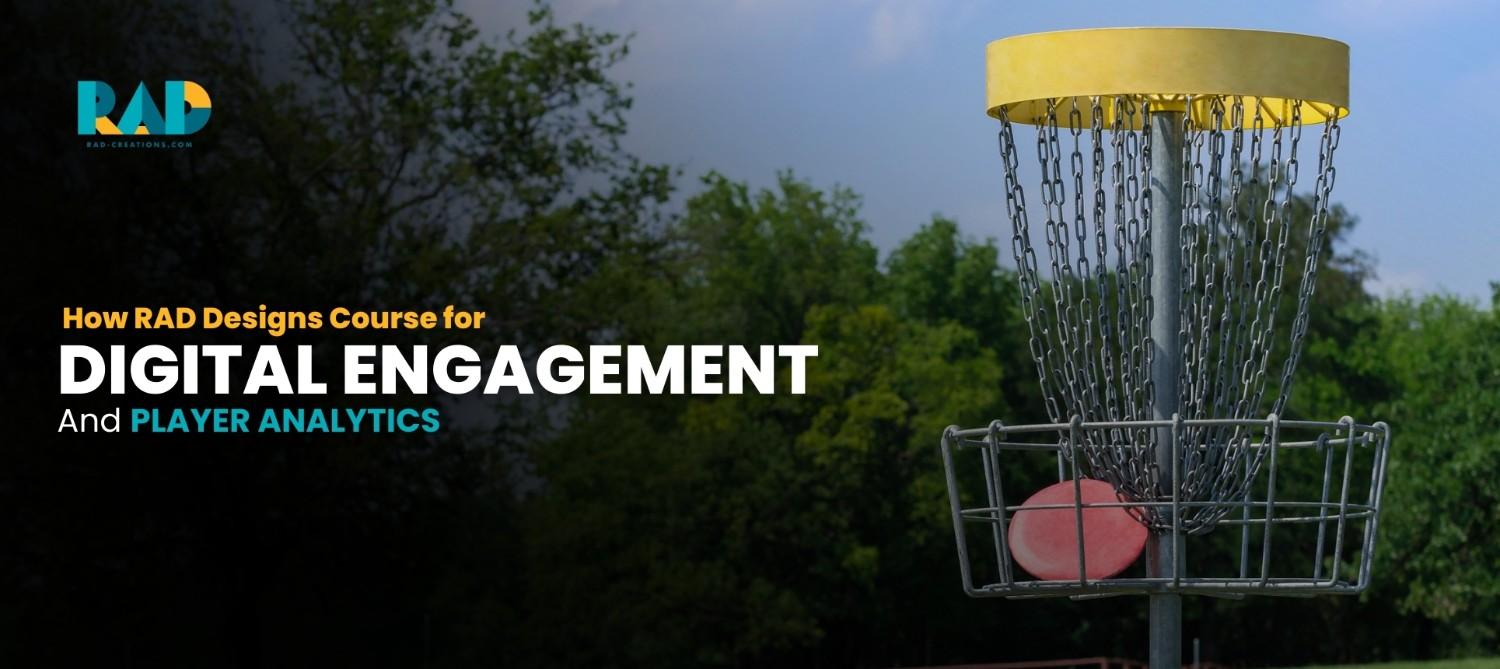
Digital tools aren’t just for players they’re revolutionising how RAD designs courses, plans flow, and measures impact.
Here’s what we use behind the scenes:
- GPS Mapping & Drone Footage: To capture elevation, terrain texture, and potential hazards before we break ground.
- 3D Course Simulations: Allowing councils and stakeholders to “walk through” a course virtually during the design phase.
- UDisc Pro Design Integration: Ensuring every RAD course is upload-ready with accurate mapping, hole-by-hole previews, and metadata.
- Heat Mapping & Flow Analysis: Tracking user data post-installation (where available) to inform updates or highlight heavily used areas.
Why this is important:
Courses designed with digital integration in mind:
- Are more discoverable online
- Provide better data for funding and upgrades
- Make for smoother player experiences
This digital-first approach also strengthens the visibility of disc golf in media, aligning with trends explored in the role of media in disc golf.
Bringing Digital Literacy into Sport: Disc Golf in the Classroom and Community
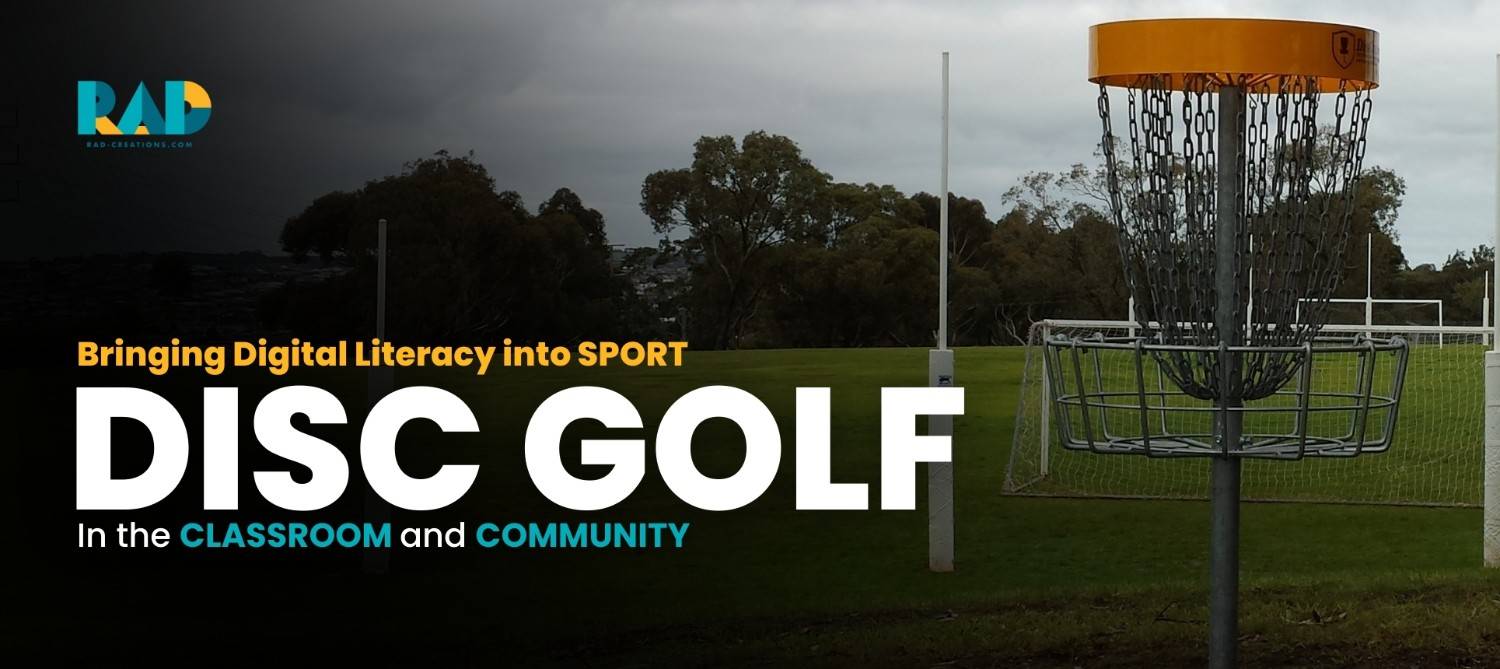
Elevating the Disc Golf fusion of tech and play has surprising applications beyond recreation. In schools and community programs, disc golf apps are helping teach digital literacy, teamwork, and data analysis.
Education benefits of digital disc golf tools:
- Data-Driven Learning: Students track scores, distances, and throw patterns applying maths, graphing, and analytics.
- STEM Integration: Using drone footage, course mapping, and AR viewers teaches students about technology in real-world settings.
- Digital Citizenship: As students engage with online leaderboards and social features, they also learn about respectful online behaviour and community participation.
As Elevating the Disc Golf participation grows nationwide, schools and councils benefit from understanding the sport’s broader impact, explored in our insights on disc golf in Australia.
RAD supports schools and councils by offering programs that blend tech with outdoor play, many of which are featured in our school activities and education-focused initiatives.
Frequently Asked Questions
Are disc golf apps beginner-friendly?
Yes! Most apps are designed with intuitive interfaces. Players can simply search for nearby courses, keep score, and explore features as they grow. RAD ensures all new courses are easily listed and mapped for beginners to find and play.
Do you need mobile reception to use these tools on the course?
Most apps offer offline features scorecards, maps, and even AR overlays can be downloaded before heading out, making them reliable even in remote areas.
Can councils or schools use digital tools to monitor course use?
Yes. Apps like UDisc offer anonymous usage data, which helps stakeholders understand player volumes, peak times, and course flow. RAD can assist in setting up post-installation tracking and analytics.
Final Thoughts
The future of disc golf isn’t just in the discs it’s in your pocket. As technology becomes more integrated into sport, disc golf stands out as one of the few activities that embraces innovation without losing its connection to nature and community.
RAD is proud to lead the charge in designing disc golf experiences that are digitally enhanced, environmentally respectful, and community-driven. Whether it’s a student discovering the sport through AR or a seasoned player tracking performance with UDisc, the digital layer is enriching disc golf for everyone involved.
For players exploring more digitally supported disc golf experiences, the Australian Disc Golf course directory offers an extensive overview of layouts across the country, making it easier to discover both beginner-friendly and advanced courses. To see how individual courses are mapped globally with GPS data and community feedback, the PDGA profile for Alexander Heights Disc Golf Park provides a clear example of how technology enhances visibility and player insights. Those interested in real-world applications of modern course planning can explore the Curtin University Disc GolfPark, which reflects how institutions adopt innovative design tools to engage students and visitors. And for players seeking scenic destinations supported by digital navigation, the Dinner Plain Disc Golf Course on UDisc demonstrates how mapping platforms guide users through unique regional courses with confidence.

Leave A Comment