
The Founding Fathers Of Disc Golf
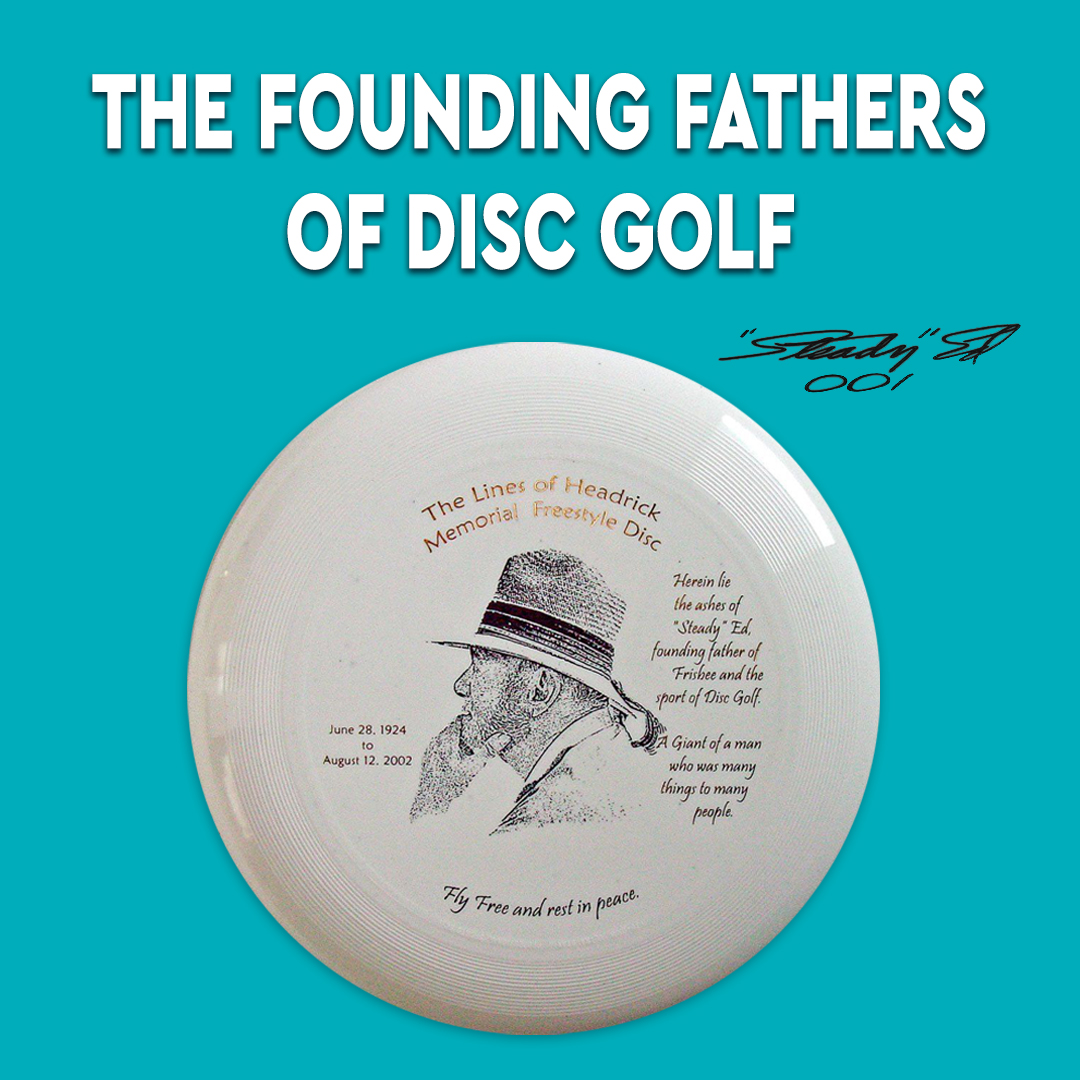
Despite being a relatively new sport in the grand scheme of things, disc golf’s basic premise has been around far longer than most realize. Notable names like “Steady” Ed Headrick and Dave Dunipace are credited with introducing the modern golf disc and basket to the world, yet there are many behind-the-scenes individuals who have helped make what we love to do a reality.
Steady Ed Headrick: The Founding Father of Disc Golf
If one person deserves the strongest claim as the father of modern disc golf, it is “Steady” Ed Headrick. He helped move the game out of its loose object-golf phase and into something more organized, repeatable, and easy to grow. PDGA history credits him with installing the first official disc golf course at Oak Grove Park in Pasadena in 1975, using fixed pole targets before baskets became standard. That gave the sport a real public home and a model other communities could copy.
Headrick’s next step was just as important. In April 1976, he left Wham-O and started the Disc Golf Association, or DGA, to formalize the game and promote course installation. He also helped create the Professional Disc Golf Association in 1976, giving the sport an organizing body, a membership structure, and a clearer set of standards for competition. Those moves turned disc golf into more than a pastime in the park. They gave it a business, a governing framework, and a path for national growth.
His most lasting contribution may be the target itself. In 1977, Headrick and his son Ken developed the Disc Pole Hole, the chain-supported basket design that became the foundation for modern disc golf targets. That invention mattered because it made scoring more consistent and course design more practical. Once players no longer had to aim at random objects, disc golf started to look and feel like its own sport with its own identity.
Dave Dunipace and the Modern Golf Disc
Dave Dunipace helped change disc golf from a target game with simple flying discs into a sport built around purpose-made equipment. In 1983, Champion Discs, which later became Innova, entered the scene with the proto Aero, originally called the Eagle. PDGA history describes that disc as a “quantum leap in technology,” and Innova’s own history links Dave’s early designs directly to the rise of the modern golf disc.
What made Dunipace so important was not just that he started a company. He helped push disc design into a new era where players could throw with more control, shape different lines, and choose discs for specific jobs on the course. That shift gave disc golf a level of shot-making that older Frisbee-style play simply did not have. In a very real sense, Dave helped turn the disc itself into a true piece of sporting equipment rather than just a general flying toy.
His influence did not stop with one mold. PDGA notes that Dunipace engineered advances in disc technology that pushed the sport forward, and the disc rating system used by many players today also traces back to him through Innova’s flight numbers. That legacy matters because modern disc golf is built as much on course design and rules as it is on the discs players carry. Dave Dunipace helped define that equipment side of the game.
Early Roots of Disc Golf Before Formal Courses
Long before permanent baskets and marked fairways existed, many in the early 1900s had a notion of how disc golf works. People had been throwing disc-like objects for centuries, and flying disc play became much more recognizable in the early 20th century as casual tossing games grew in popularity. Plastic flying discs hit the market in 1948, and Wham-O later helped popularize the Frisbee. That wider flying disc boom created the setting that made disc golf possible.
Early versions of disc golf were much closer to object golf than the modern sport players know today. Instead of chains and metal targets, players aimed at trees, poles, trash cans, or whatever landmark could serve as a finish point. The game existed more as a creative outdoor challenge than an organized sport, but that was exactly what made it spread. It was simple, cheap to play, and easy for local groups to adapt in parks and open spaces.
The shift toward formal disc golf began in the 1970s, when casual flying disc play started to take on a more structured form. The first official disc golf course at Oak Grove Park in Pasadena was installed in 1975, and that moment gave the sport a real home base. It also marked the point at which disc golf began to separate itself from general Frisbee games and develop its own identity, rules, and equipment.
Women and Other Early Pioneers in Disc Golf History
The founding fathers of disc golf also had founding mothers who are too often left out of early disc golf stories. Jo Cahow stands out as one of the clearest examples. PDGA describes her as a true pioneer for women in the sport, noting that she won the World Overall Championships in 1974 and again in 1975, when disc golf was first added. She was also recognized as a mentor and an early voice who helped make sure women had a place in the game as it grew.
Other early pioneers helped build the sport at the local and organizational level. PDGA history notes that Jim Palmeri and a small group in Rochester, New York, had already been playing competitive disc golf regularly by 1970, well before the sport had a formal national structure. That matters because it shows disc golf did not grow through one inventor alone. Local players, promoters, and tournament organizers were already creating leagues, championships, and a culture around the game before it was fully standardized.
Dan “Stork” Roddick also played a major role in helping disc golf gain wider exposure. PDGA says Ed Headrick hired him to direct Wham-O’s Sports Promotion Department, and his input helped bring disc golf into the 1975 World Frisbee Championships. When you look at the sport’s early growth, that broader cast of builders becomes impossible to ignore. Disc golf was not created by one person. It was shaped by innovative and competitive people who helped turn a simple throwing game into an organized sport.
Final Word
The founding fathers of disc golf are people turning a simple game into a professional activity. Steady Ed Headrick helped give disc golf its structure, Dave Dunipace changed what players could do with the disc itself, and other pioneers helped grow the game through events, promotion, and community support. Women like Jo Cahow also deserve a clear place in that history, because the sport was never built by men alone. What started as casual object play became a real competitive sport because so many early figures believed it could be something bigger.
If you’d like to explore more about how disc golf has grown from its early days, the Professional Disc Golf Association Course Directory provides an international perspective on courses and sanctioned events. For a national resource, the Australian Disc Golf Course Directory is a trusted guide to finding layouts and learning about the sport’s expansion across the country. On a local level, Chichester Park Disc Golf Park in Western Australia shows how community-backed courses are introducing more people to the game. And for players looking to connect history with modern play, the Barwon Valley Disc Golf Course in Victoria is a standout destination that reflects the sport’s continuing legacy.




Leave A Comment